Showing posts with label HDR. Show all posts

Tuesday, 28 August 2007

Over The Balcony

Over The Balcony


Melbourne's so foggy these few days. Plane cancelled, me not being able to see the streets below from the 29th floor. Well, I grab a picture when there was very little fog. I planned to take the sunset but i missed it. But a pleasant surprise was that The lights after sunset is nicer (dark dark blue sky). The fog that blankets the building give a nice warm orang halo around the city. Took a couple of exposure (longest of about 90sec) and then combined them with photoshop. Used old square masking technique. Photomatix fail me this time.

Tuesday, 26 June 2007

As The Water Grows

As The Water Grows


A HDR shot of the Steavanson Falls from the bridge. Total of 3 shots combined to make the HDR, and the resulting image is further tuned in photoshop.

Wednesday, 13 June 2007

Don't Dry Me Up

Don't Dry Me Up


This dam was taken during the camp. Over at the Lake Eildon in Marysville. Of course this view was from the top of the hill. The title is dedicated to the always dwindling reserve in the Victoria's dam and also the searing 37degrees temperature that we are experiencing now.


Rock-fill dams
Rock-fill dams are embankments of compacted free-draining granular earth with an impervious zone. The earth utilized often contains a large percentage of large particles hence the term rock-fill. The impervious zone may be on the upstream face and made of masonry, concrete, plastic membrane, steel sheet piles, timber or other material. The impervious zone may also be within the embankment in which case it is referred to as a core. In the instances where clay is utilized as the impervious material the dam is referred to as a composite dam. To prevent internal erosion of clay into the rock fill due to seepage forces, the core is separated using a filter. Filters are specifically graded soil designed to prevent the migration of fine grain soil particles. When suitable material is at hand, transportation is minimized leading to cost savings during construction. Rock-fill dams are resistant to damage from earthquakes. However, inadequate quality control during construction can lead to poor compaction and sand in the embankment which can lead to liquefaction of the rock-fill during an earthquake. Liquefaction potential can be reduced by keeping susceptible material from being saturated, and by providing adequate compaction during construction. An example of a rock-fill dam is New Melones Dam in California.

Earth-fill dams
Earth-fill dams, also called earthen, rolled-earth or simply earth dams, are constructed as a simple embankment of well compacted earth. A homogeneous rolled-earth dam is entirely constructed of one type of material but may contain a drain layer to collect seep water. A zoned-earth dam has distinct parts or zones of dissimilar material, typically a locally plentiful shell with a watertight clay core. Modern zoned-earth embankments employ filter and drain zones to collect and remove seep water and preserve the integrity of the downstream shell zone. An outdated method of zoned earth dam construction utilized a hydraulic fill to produce a watertight core. Rolled-earth dams may also employ a watertight facing or core in the manner of a rock-fill dam. An interesting type of temporary earth dam occasionally used in high latitudes is the frozen-core dam, in which a coolant is circulated through pipes inside the dam to maintain a watertight region of permafrost within it.
Because earthen dams can be constructed from materials found on-site or nearby, they can be very cost-effective in regions where the cost of producing or bringing in concrete would be prohibitive.

(source wikipedia.com)

Monday, 11 June 2007

Keppel Smoothie

Keppel Smoothie


This is the Keppel Stream from the Keppel falls. After a drive along the Lady Talbot drive, one lane road with many potholes and about 1km walk, you will reach the Keppel Falls. This image is a HDR image composed of 3 exposure. It may looks so colourful and so exposure correct that it seems fake.

Thursday, 24 May 2007

Stevenson Blunder

Stevenson Blunder


This is the other side to the Stevenson Fall, the highest waterfall in Victoria. This is a High Dynamic Range (HDR) shot which you will never get through with a single exposure photo.

Monday, 15 January 2007

Shine On Me

Shine On Me


This photo was taken in Law library of the University of Melbourne. The weather on that day was cloudy and kind of weird. I was studying beside the full length window when lights start breaking through the clouds. As time went by, the formation become more and more interesting. This picture is made up of 3 differently exposed pictures to properly expose the sky, clouds and the city.

Monday, 16 October 2006

Pointing to heaven

Pointing to heaven


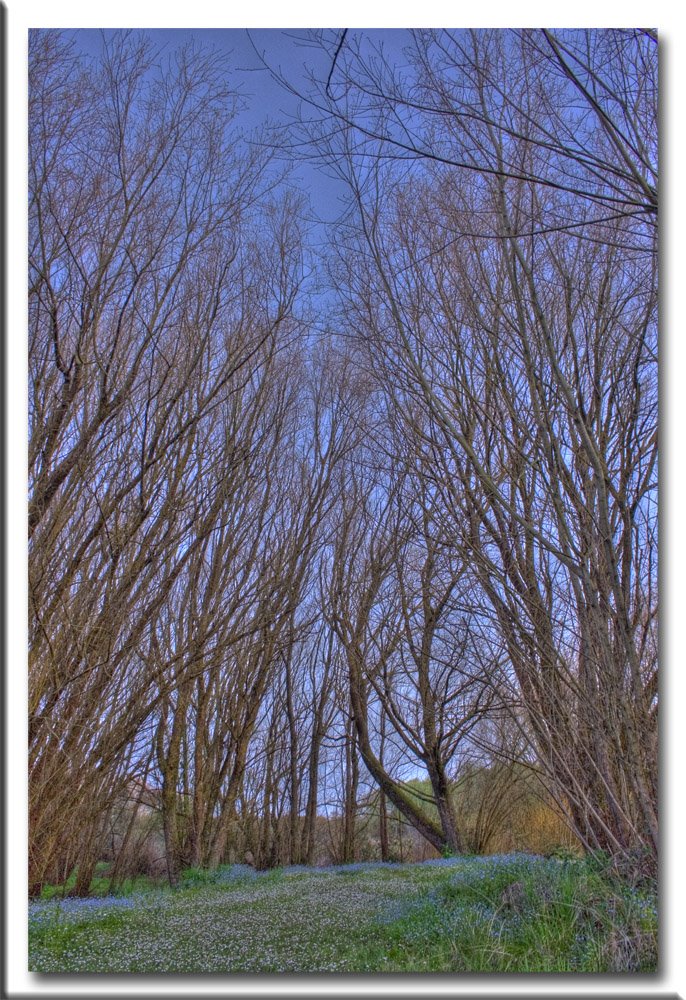
This is another HDR shot. This was again at the Camp Cooriemungle. The ground was the picture in the previous post, "Royalty Ground". The trees were out of leaves as it was during winter and spring is not here yet. The tree branches were curving out and poiting up towards the sky! I guess these were the symtomps that the tree need more sunlight and had to branch out and reach out for the sky in order to survive.


Heaven is an afterlife concept found in many religions or spiritual philosophies.

Those who believe in heaven generally hold that it (or Hell) is the afterlife destination of many or all humans. In unusual instances, humans have had, according to many testimonies and traditions, personal knowledge of Heaven. They presume this is for the purpose of teaching the rest of humanity about life, deities and notions of the afterlife.

One popular medieval view of Heaven was that it existed as a physical place above the clouds and that God and the Angels were physically above, watching over man. With the dawn of the Age of Reason, science began to challenge this notion; however Heaven as a physical place survived in the concept that it was located far out into space, and that the stars were "lights shining through from heaven".

Religions that teach about heaven differ on how (and if) one gets into it. In most, entrance to Heaven is conditional on having lived a "good life" (within the terms of the spiritual system). Catholicism and Anglican Christianity states that "He that believeth and is baptised shall be saved." However, these religions also state that pride (the feeling of knowing that one is going to Heaven) can keep you from getting in Heaven. These religions also state that you must live a repented life in order to get to heaven.

Roman Catholics believe that entering Purgatory after death cleanses one of one's sins and makes one acceptable to enter Heaven. This is valid for "venial sins" only. Some within the Anglican Church also hold to this belief, despite their Anglican history. However, in Oriental Orthodox Churches, it is only God who has the final say on who enters Heaven.

The Seventh-day Adventist understanding of heaven is based on Biblical writings which set out the following:

  • That heaven is a real place where God resides.
  • That earth and all the animate and inanimate things therein and within its celestial space are products of God's creative work.
  • That God sent His Son, Jesus Christ to earth to live as a human being, but who "perfectly exemplified the righteousness and love of God. By His miracles He manifested God's power and was attested as God's promised Messiah. He suffered and died voluntarily on the cross for our sins and in our place, was raised from the dead, and ascended to minister in the heavenly sanctuary in our behalf." [5].
  • That Christ promises to return as a Saviour at which time He will resurrect the righteous dead and gather them along with the righteous living to heaven. The unrighteous will die at Christ's second coming. [6].
  • That after Christ's second coming there will exist a period of time known as the Millennium during which Christ and His righteous saints will reign and the unrighteous will be judged. At the close of the Millennium, Christ and His angels return to earth to resurrect the dead that remain, to issue the judgements and to forever rid the universe of sin and sinners. [7].
  • "On the new earth, in which righteousness dwells, God will provide an eternal home for the redeemed and a perfect environment for everlasting life, love, joy, and learning in His presence. For here God Himself will dwell with His people, and suffering and death will have passed away. The great controversy will be ended, and sin will be no more. All things, animate and inanimate, will declare that God is love; and He shall reign forever." [8]. It is at this point that heaven is established on the new earth.
(courtesy wikipedia.com)

Monday, 9 October 2006

Leading Line

Leading Line


This is int he camp Coorimungle. Nice? Of course! Well, may not be the taste for those who are looking for "real" subject. This shot is made from 3 shots taken over, under and normal exposure. What this means is that one of the picture is taken very very bright and one very very dark and another normal. These three pictures are then combined using High Dynamic Range (HDR) rendering program to create one HDR image.


HDR allows a far greater dynamic range of exposures (i.e a large difference between light and dark areas) than normal digital imaging techniques. The intention of HDR is to accurately represent the wide range of intensity levels found in real scenes ranging from direct sunlight to the deepest shadows.

One problem with HDR has always been in viewing the images. CRTs, LCDs, prints, and other methods of displaying images only have a limited dynamic range. Thus various methods of "converting" HDR images into a viewable format have been developed, generally called "tone mapping".

Early methods of tone mapping were simple. They simply showed a "window" of the entire dynamic range, clipping to set minimum and maximum values. However, more recent methods have attempted to show more of the dynamic range. The more complex methods tap into research on how the human eye and visual cortex perceive a scene, trying to show the whole dynamic range while retaining realistic colour and contrast.

(courtesy wikipedia.com)