Showing posts with label Transport. Show all posts

Sunday, 17 June 2007

One Car At A Time

One Car At A Time


This wooden bridge surely do feel strong and steady. However, you surely would not want to stand on it when a car roll past.
Bridges may be classified by how the four forces of tension, compression, bending and shear are distributed through their structure. Most bridges will employ all of the principal forces to some degree, but only a few will predominate. The separation of forces may be quite clear. In a suspension or cable-stayed span, the elements in tension are distinct in shape and placement. In other cases the forces may be distributed among a large number of members, as in a truss, or not clearly discernible to a casual observer as in a box beam. Bridges can also be classified by their lineage, which is shown as the vertical axis on the diagram to the right.
(courtesy of wikipedia.com)

Wednesday, 18 April 2007

I'm The Great

I'm The Great


My feet! Toying with the chairlift infront of me virtually. Who's the king here?
A chairlift (technically, an elevated passenger ropeway), is a type of aerial lift, which consists of a continuously circulating steel cable loop strung between two end terminals and usually over intermediate towers, carrying a series of chairs. They are the primary onhill transport at most ski areas (in such cases referred to as 'skilifts'), but are also found at amusement parks, various tourist attractions, and increasingly, in urban transport.
(courtesy of wikipedia.com)

Tuesday, 17 April 2007

Turnaround

Turnaround


This is where the chairlifts end and turn to go to the other end otherwise known as the bullwheel. I had those kind of scenes where that tower broke and the whole chairlift system just plunge down. Just wondering Does it look safe? No. Why was I on it? I have to.
The rope is the defining characteristic of an elevated passenger ropeway. The rope stretches and contracts as the tension exerted upon it increases and decreases, and it bends and flexes as it passes over sheaves and around the bullwheels. The fibre core contains a lubricant which protects the rope from corrosion and also allows for smooth flexing operation. The rope must be regularly lubricated to ensure safe operation and long life.
Various techniques are used for constructing the rope. Dozens of wires are wound into a strand. Several strands are wound around a textile core, their twist is oriented in the same or opposite direction as the individual wires; this is referred to as Lang lay and regular lay respectively.
Rope is constructed in a linear fashion, and must be spliced together before carriers are affixed. Splicing involves unwinding long sections of either end of the rope, and then winding each strand from opposing ends around the core. Sections of rope must be removed, as the strands overlap during the splicing process.
(courtesy of wikipedia.com)

Thursday, 12 April 2007

Great Early Sunday

Great Early Sunday


This photo was taken during Mao Zhi Dong's Birthday on the 26th of December 2006. This particular one was taken near a public toilet though. I still remembered that this photo was taken before I had entered the toilet as I was afraid that it will be gone when I'm done. This only gave me 3 chance to take the photo (urgent!!!) and as expected, it was gine when I came out. The title was given not because the picture was literally taken on a Sunday, but the cliche of cycling down the street on an early Sunday.
Today, gas balloons are often filled with helium, which is non-flammable. Gas balloons are regularly used for high-altitude research (such as with weather balloons) and for record-breaking manned balloon flights.
Helium-filled balloons for scientific research have flown to altitudes more than 50 km above sea level, above Earth's stratosphere and into the mesosphere. Such balloons fly above over 99.9% of Earth's atmosphere and operate in near-vacuum. They are used to image the Sun and stars in ultraviolet or other wavelengths of light that does not penetrate the atmosphere, to detect weak cosmic rays or the cosmic microwave background, or to study conditions at the top of the atmosphere.
(courtesy of wikipedia.com)

Saturday, 7 April 2007

Water Leak

Water Leak


Bicycle, rotting vegetables, grime and pools of dirty water just beside the food court in the Bu Xing Lu. I had shot this with burst mode with a shutter speed of only 1/18th of sec.

Monday, 26 February 2007

Ship Museum

Ship Museum


This photo was taken back in Changsha, China. These men were looking at those wooden boat just beside the river. Do those ships belong to them? Are they wanting to buy the ships? What interest me is that those steep banks in the foreground of the picture are in the shape of a hull of a ship.


Until the application of the steam engine to ships in the early 19th century, oars propelled galleys or the wind propelled sailing ships. Before mechanisation, merchant ships always used sail, but as long as naval warfare depended on ships closing to ram or to fight hand-to-hand, galleys dominated in marine conflicts because of their maneuverability and speed. The Greek navies that fought in the Peloponnesian War used triremes, as did the Romans contesting the Battle of Actium. The use of large numbers of cannon from the 16th century meant that maneuverability took second place to broadside weight; this led to the dominance of the sail-powered warship.

(courtesy of wikipedia.com)

Monday, 19 February 2007

Loo Loo

Loo Loo


You think that Audi is only for the riches? There are plenty of Audis running around in China. This particular one has such a weird license plate parked outside my hotel in Changsha, China.


Audi's German tagline is "Vorsprung durch Technik", meaning "Advancement Through Technology", implying an advantage due to superior technology. The American tagline is "Truth in Engineering".

Pronunciation: The correct German and Latin form rhymes with "howdy", without the 'h' sound (IPA pronunciation: /aʊdi/).

Audi has publicly set a goal to surpass BMW and the luxury and safety leaders Mercedes-Benz in global sales by 2015 and have made giant strides to the achievement of this goal since.

(courtesy of wikipedia.com)

Thursday, 16 November 2006

Doppler

Doppler


This was my friend's car, Carla. Yes, was. She sold this car. In fact, this picture was taken originally to help her sell the car. The distortion of the corner of the car make it looks much bigger than normal. The combination of the Xenon white light and the orange turn light give a sense of warmth and excitement to the picture. The title of this post has been dedicated to my coming Physics exam which has a chapter on Doppler. Doppler is the different in the frequence of sound received when the receiver or/and sender are moving. This is v distinct in nascar when you heard the high pitched sound coming and after the car passes it will be followed with a low and deep sound.


The earliest headlamps were fueled by acetylene or oil and were introduced by drivers in the late 1880s. Acetylene was popular because the flame was resistant to wind and rain. The first electric headlamps were introduced in 1898 on the Columbia Electric Car from the Electric Vehicle Company of Hartford, Connecticut, but they were optional. "Prest-O-Lite" acetylene lights were offered by a number of manufacturers as standard equipment for 1904, and Peerless made electrical headlamps standard in 1908. In 1912, Cadillac integrated their vehicle's Delco electrical ignition and lighting system, creating the modern vehicle electrical system.

Pop-up headlamps were introduced in 1937, on the Cord 812. They were mounted in the front fenders, which were smooth until the lights were activated, aiding aerodynamics when the headlamps were not in use. They also provided a means of fitting a large 7 inch round headlamp into an otherwise pointed front end.

HID stands for high-intensity discharge, the technical term for the electric arc that produces the light. Automotive HID lamps are commonly called 'xenon headlamps', because of the xenon gas used in the lamps. The xenon gas allows the lamps to produce minimally adequate amounts of light immediately upon startup and speed the warmup time.

HID stands for high-intensity discharge, the technical term for the electric arc that produces the light. Automotive HID lamps are commonly called 'xenon headlamps', because of the xenon gas used in the lamps. The xenon gas allows the lamps to produce minimally adequate amounts of light immediately upon startup and speed the warmup time.

There has been a recent resurgence in interest in the idea of moving or optimizing the headlight beam in response not only to vehicular steering and suspension dynamics, but also to ambient weather and visibility conditions, vehicle speed, and road curvature and contour. A task force composed primarily of European automakers, lighting companies and regulators began working to develop design and performance specifications for what is known as Advanced Front-lighting Systems, commonly "AFS". Manufacturers such as Audi and Lexus have released vehicles equipped with AFS since 2002. Rather than the mechanical linkages employed in earlier directional-headlamp systems, AFS relies on electronic sensors, transducers and actuators. Other AFS techniques include special auxiliary optical systems within a vehicle's headlamp housings. These auxiliary systems may be switched on and off as the vehicle and operating conditions call for light or darkness at the angles covered by the beam the auxiliary optics produce. Development is underway of AFS systems that use GPS signals to anticipate changes in road curvature.

Headlamps require very little care. Sealed beam headlamps are modular. When the filament burns out, the entire module is replaced. Most 1985 and later-model vehicles in North America use headlamp lens-reflector assemblies that are considered a part of the car, and just the bulb is replaced if it fails. There are many different bulb types, and they are not interchangeable, so the correct bulb for the specific vehicle year, make and model must be purchased. Manufacturers vary the means by which the bulb is accessed and replaced.

Headlamp aim must be properly checked and adjusted on a regular, periodic basis. Misaimed lamps are dangerous and ineffective.

Over time, the front lens can deteriorate. It can become pitted due to abrasion of road sand and pebbles. It can become cracked, admitting water into the headlamp. "Plastic" (polycarbonate), can become cloudy and discolored, turning yellowish. This is due to oxidation of the painted-on lens hardcoat by ultraviolet light from the sun and the headlamp bulbs. If it is minor, it can be polished out using a reputable brand of a car polish that is intended for restoring the shine to chalked paint. In more advanced stages, the deterioration extends through the actual plastic material, rendering the headlamp useless and necessitating complete replacement. Sanding or aggressively polishing the lenses can buy a small amount of time, but doing so removes the protective coating from the lens, which when so stripped will deteriorate faster and more severely.

The reflector, made out of extremely thin vaporized aluminum deposited on a metal, glass or plastic base, can become oxidized or burnt and lose its specular reflective properties. This can happen if water enters the headlamp, if bulbs of higher wattage than specified is used, or simply with age and use. If the reflector when viewed by itself is not mirror-perfect, the headlamp should be replaced, for reflectors cannot effectively be restored

(courtesy wikipedia.com)
Sunday, 5 November 2006

Rowing Down Yarra

Rowing Down Yarra


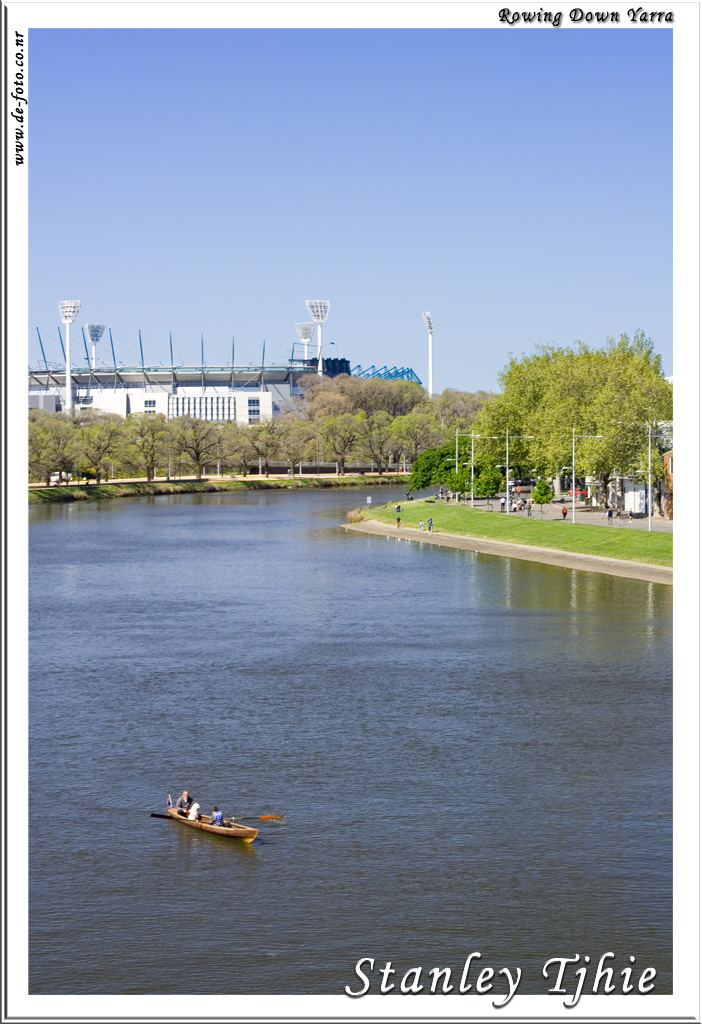
This is the 200th post!!! Yeah... This picture was taken at Yarra River facing the East side. The Melbourne Cricket Ground (MCG) can be seen at the back. The position of the rower was perfect for the shot. The rower was actually a small boy accompanied by, I guess, his grandfather. It will look really romantic if there was a sun at the back and making an orange tinge. However, too bad the sun sets at the west.


With regard to watercraft, rowing is propulsion, usually of a small boat, by forcing one or more oars mounted on the craft via rowlocks to push against the water. The purpose can be transport, recreation or sport.

The most common instances, called sculling, are those where one rower pulls on two oars, each a single straight piece mounted to an oarlock on the gunwhale of the boat, thereby moving the boat in the direction opposite that which the rower faces. A single oar per rower, called sweeping, multiple rowers (usually coordinated by a coxswain), articulated oars that facilitate efficient rowing in the direction the rower faces, maneuvers aimed at turning or at rowing in the opposite direction, and some combinations of these, are also well established aspects of rowing.

For the principal case described above, keeping equal forces on the two oars, efficiently coordinating the application of vertical and horizontal force according to the point in the cycle of rowing, and muscular strength and endurance, are major aspects of effective rowing.

In ancient times, rowing boats (known as galleys) were extensively used during war. The Persians and the Athenians fought many sea battles in rowing boats. The Athenians rammed their enemy's ships at great speed - sometimes using up to 170 oarsmen. They also used moving seats which allowed the oarsmen to use their legs and propel the ship faster.

Galleys were an advantage over sailing ships due to being easier to manoevure and quicker. The Vikings took it one step further and added sails to their rowing boats, called longships, allowing them to move very quickly with a tailwind. Their usage continued until the advent of steam propulsion.

In Venice, gondolas are popular forms of transport propelled by oars - although more modern versions have an outboard motor. The technique [1] of rowing is considerably different from the style used in sport, due to the oarsman facing forward. This allows the boat to manoeuover very quickly - useful in the narrow and busy canals of Venice.

(courtesy wikipedia.com)


Saturday, 4 November 2006

Pan Pan Pan

Pan Pan Pan


This picture was taken at the Princess Bridge. I used a panning technique to create a blur effect on the background and clear for the Mazda MX-5 car. Aiming at the car and following it, I press the shutter gently and continue following it during the 1/20s of my non breathing life and hope for the best. The car was further sharpened in photoshop. The title was given to match Mazda's catch phrase of "Zoom Zoom Zoom".


The Mazda MX-5 (also known as Miata in North America and Roadster in Japan) is a sports car built by Mazda in Hiroshima, Japan, since 1989. As of 2006, the MX-5 was one of the world's best-selling sports cars, with over 750,000 cars sold in total.

MX-5 was designed with a traditional FR (front-engine, rear-wheel-drive) layout and 4-wheel independent double wishbone suspension. It comes with a longitudinally mounted four cylinder engine coupled to a manual transmission (an automatic transmission is available as an option).

The body is a conventional, but very light, unibody shell. The MX-5 also incorporates a unique trusswork called the Powerplant Frame (PPF) which connects the engine to the differential, minimizing flex and creating a tight, responsive feel. Many MX-5s feature limited slip differentials and antilock brakes. Traction control is an option available on some models.

With an approximate 50:50 front/rear weight balance, the car has very neutral handling, which makes it easy to drive for the beginner, and fun for the advanced driver.

There have been three generations of the MX-5, consisting of major stylistic and mechanical upgrades. The first generation, designated NA, sold over 400,000 units. It was produced from 1989 to 1997, initially with a 1.6-liter straight-4 engine, and from 1994 with a 1.8-liter engine. The NA can be recognized by its distinctive pop-up headlights. The second generation NB was introduced in 1999 with a slight increase in engine power; it can be recognized by the fixed headlights. The third generation NC was introduced in 2005 with a 2.0-liter engine; it can be recognized by the fender bulges over the wheel wells.

The MX-5 has won over 150 awards in its history,[2] including making Car and Driver magazine's annual Ten Best list seven times; Wheels Magazine 's Car of the Year for 1989 and 2005; Sports Car International's "best sports car of the 1990s" and "ten best sports cars of all time"; 2005-2006 Car of the Year Japan; and 2005 Australian Car of the Year.

In video games, MX-5s are featured in a number of titles including the Need For Speed Underground series, the Project Gotham Racing series, the Gran Turismo series, Juiced and Forza Motorsport.

On TV, an episode of American sitcom Newsradio had the owner of the radio station give MX-5s to all his employees. Band Blink 182 had a red MX-5 dropped from a crane in the music video for their song "Rock Show". Also, a pair of episodes of the sitcom Saved by the Bell, titled "Wicked Stepbrother" parts 1 and 2, revolved around one of the characters getting a Miata. On books, Lawrence Sanders's McNally series has the main character mentioning his 1990 red Miata a few times in each of the stories, and the Guinness Book of Records registered the MX-5 as the world's best-selling sports car in 2002.[5]

(courtesy wikipedia.com)
Friday, 6 October 2006

Emission

Emission


Refuel station at Port Campbell on the way to the camp Coorimungle. I noticed that the setting looks very old fashioned and the white rusty beetle car and the gas tank will definately add an an impact when made into black and white photo.


Some stations carry specialty fuels such as liquified petroleum gas (LPG), natural gas, hydrogen, biodiesel, ethanol, or kerosene. In recent times filling stations have also begun to sell butane and added shops to their primary business, and convenience stores are now a familiar sight alongside pumps.

As automobiles became popular in the United States, the need for gas stations arose. (The first places that sold gasoline were pharmacists, as a "side line" business.)[citation needed] Henry Ford's use of mass-production techniques to manufacture automobiles made it possible for consumers to purchase cars at an affordable price. This increase in car ownership resulted in a greater demand for filling stations. The first gas station was built in 1907 by Standard Oil of California (now Chevron) in Seattle, Washington. Early on, they were known to motorists as "filling stations". Standard Oil began erecting roadside signs of their logo to advertise their gas stations.

In small towns and rural areas, gas stations sometimes allow customers to pump gas first and pay afterwards. Due to the higher incidence of crime in large urban areas (especially drive-offs), customers must generally pay before pumping fuel.

Modern gas stations have pay-at-the-pump capabilities — in most cases credit, debit, and ATM cards are accepted. At some stations, cash is also taken at the pump, although customers must collect their change at a cashier window which is often bullet-proof. Occasionally a station will have a pay-at-the-pump-only period per day, when attendants are not present, often at night, and some stations are pay-at-the-pump-only 24 hours a day.

Today, few stations advertise full service, and those that do usually only provide mini service unless a manager is involved. However, full service stations are common in wealthy and upscale areas. The cost of full service is usually assessed as a fixed amount per gallon.

It is prohibited to use open flame and, in some places, a mobile phone on the forecourt of a gas station. This is because of the risk of igniting gasoline vapor. The safety issue with mobile phones, however, is disputed. While mobile phones can distract people and increase the chance of an accident occurring, there is no significant danger from the radio waves emitted by a mobile phone. In fact, many petrol station display towers in the UK are also relay transmitters for the mobile phone networks.

Although it has been claimed that a faulty mobile phone can cause sparks or a build-up of static electricity in the user, this has not yet been conclusively proven, however mobile phone manufacturers and gas stations still tend to ask the users to switch off their phones. One is more likely to get a spark from wearing nylon clothing than from a mobile phone [1]. Also, the static charge acquired by a person as he or she leaves the car (due to triboelectric charging from friction between the person's clothing and the car seat) is thought to be the culprit in over 50% of fires which occur during refuelling. Usually, when a person leaves the car, he or she must open the door covering the gas cap and remove the cap itself, thus dissipating any static charge through a small shock as he or she is "grounded" to the car's metal body.

However, if the person has set the pump to continue filling automatically, returns to the car, then leaves the car again to check the pump before it has fully stopped, an explosion could easily result. This is because after the person has left the car for the second time, he or she is likely to remain electrically charged up to the point of touching the nozzle, at which point the concentrated vapour expelled from the tank can be ignited by sparks jumping from the person's hand to the nozzle. In the UK automatic filling is outlawed except for HGVs filling with diesel fuel to minimise the risk of fire. A recent investigation by the Discovery network found that the main culprit in most gas station fires were women, as they are 6 times more likely to get in and out of their vehicles during refueling.

It is therefore always good practice, especially in arid climates, to safely ground oneself by touching any part of the car away from the gas tank port before filling the tank or touching the filling nozzle. The effect has also been noted in several instances where jerrycans were filled in the back of a pickup truck which had a plastic "bed liner". These tanks should always be removed from the vehicle and filled while on the ground.

(courtesy wikipedia.com)

Monday, 11 September 2006

Jaguar


Jaguar


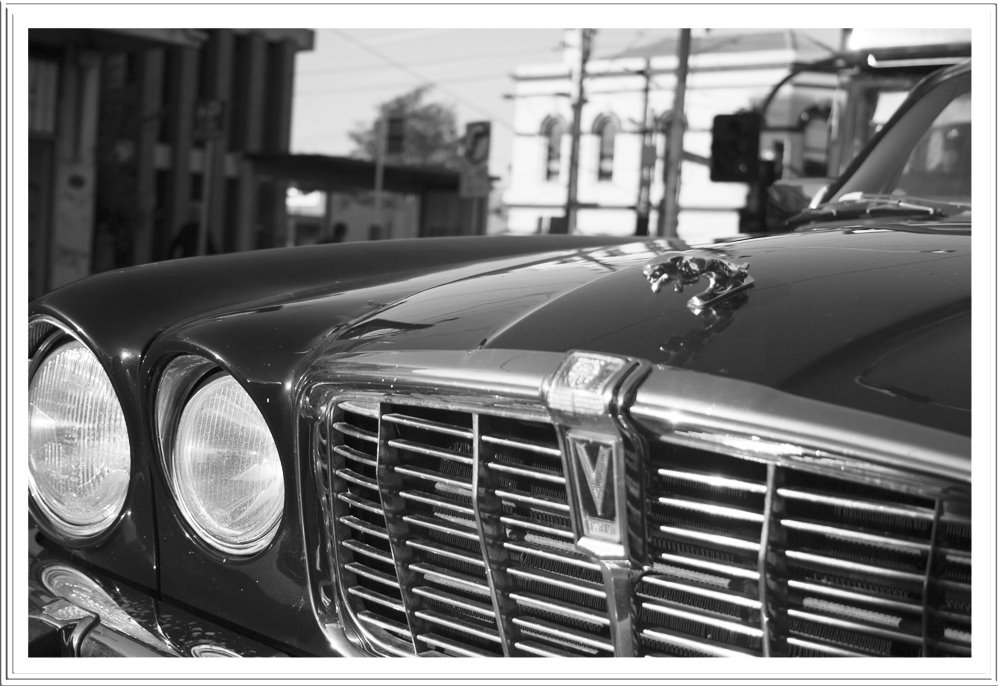
Another antique car, this time it is Jaguar car. A very fine car. From the countries i have been to, Singaporean are the most crazy over these Jaguar.


Jaguar Cars Limited is a British luxury carmaker, owned by the Ford Motor Company with headquarters at Browns Lane, Coventry, England. It was founded as SS Cars Ltd in 1922 changing its name to Jaguar in 1945.

Founded as the Swallow Sidecar Company in 1922, by two motorcycle enthusiasts, William Lyons and William Walmsley, the Jaguar name first appeared on a 2.5 Litre saloon in 1935. This name was given to the entire company when SS Cars Ltd was renamed Jaguar Cars Ltd after World War II because of the unfavourable connotations of the initials, SS.

Jaguar merged with the British Motor Corporation (BMC), the Austin-Morris combine, to form British Motor Holdings (BMH) in 1966. After merger with Leyland and Rover, the resultant company then became British Leyland Motor Corporation (BLMC) in 1968. Financial difficulties and the publication of the Ryder Report led to effective nationalisation in 1975 and the company became British Leyland Ltd (BL).

2007 US Jaguar Model Line-up
Model Type Price Range
XJ Luxury sedan $64,250 - $116,000
S-Type Luxury sport sedan $46,500 - $66,500
X-Type Near-luxury sedan & wagon $33,500 - $37,500
XK Coupe/Convertible $75,500 - $93,000


(courtesy wikipedia.com)

Saturday, 9 September 2006

Smooth

Smooth


Shot along Beach Road in Melbourne. There are many antique cars out there along the streets. This car looks cute in terms of it's curve and how the designer had tried to conceal the lights as to be part of car (maybe sacrificing on aerodynamics). The model is Jaguar E-Type (aka XKE).

Saturday, 19 August 2006

Frenzied

Frenzied


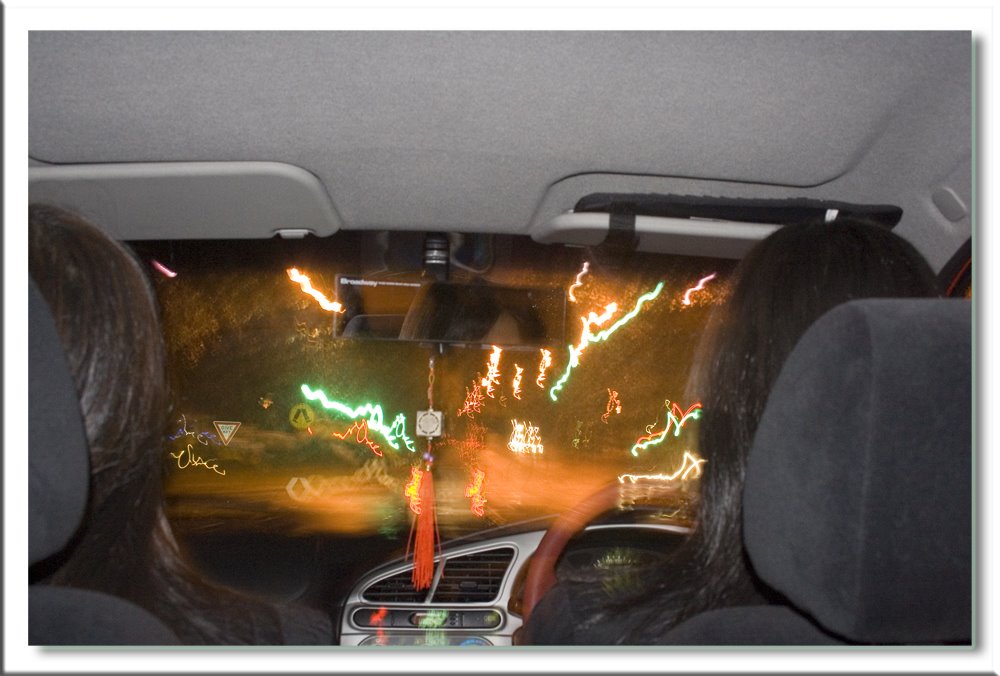
Shot on the way home from a Japanese restaurant in ringwood. This shot was taken using 2nd curtain shot. This means that the flash fires just before the shutter closes and not when it just opens. This will result the frenzied lines and when the flash fires as the shutter was about to close, the inside of the car was freeze.

Monday, 14 August 2006

Smoothie Reflection

Smoothie Reflection


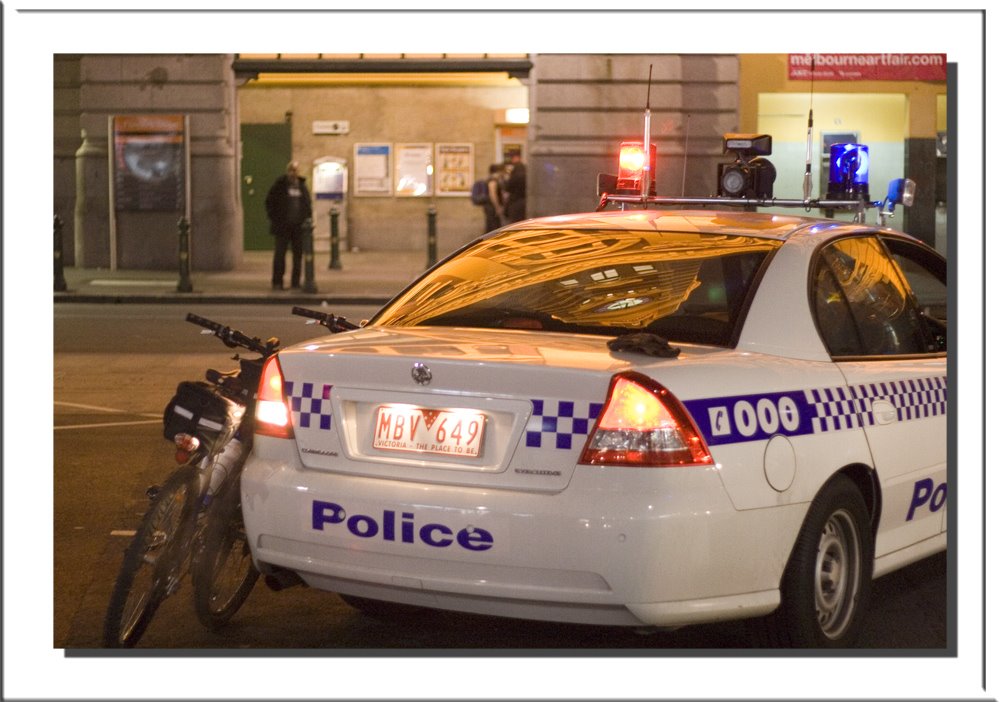
Police parking in the middle of the road: fine. We park in the middle of the road: fine ($500). Well, there was a taxi driver demonstration in the flinders and there were a lot of policemen. I find the car is very interesting under the yellow flinder's street light and the blir and red light from the police car. There was also this beautiful reflection of the flinders tower on the back of the car's window.

Saturday, 29 July 2006

Newest Tram

Newest Tram


This is Melbourne's newest tram. It will enable you to have a free 360 degrees view around the city. Well, actually it's the tram line repair truck. The whole city network tram was down and I had to walk all the way from school to city.

Saturday, 1 July 2006

Curve

Curve


Tram approaching a curve track! This photo was purposely over exposed in the post process not only to enrich it's yellow tone, but also to give the road a slippery felling.