Friday, 20 October 2006

Unforgiving

Unforgiving


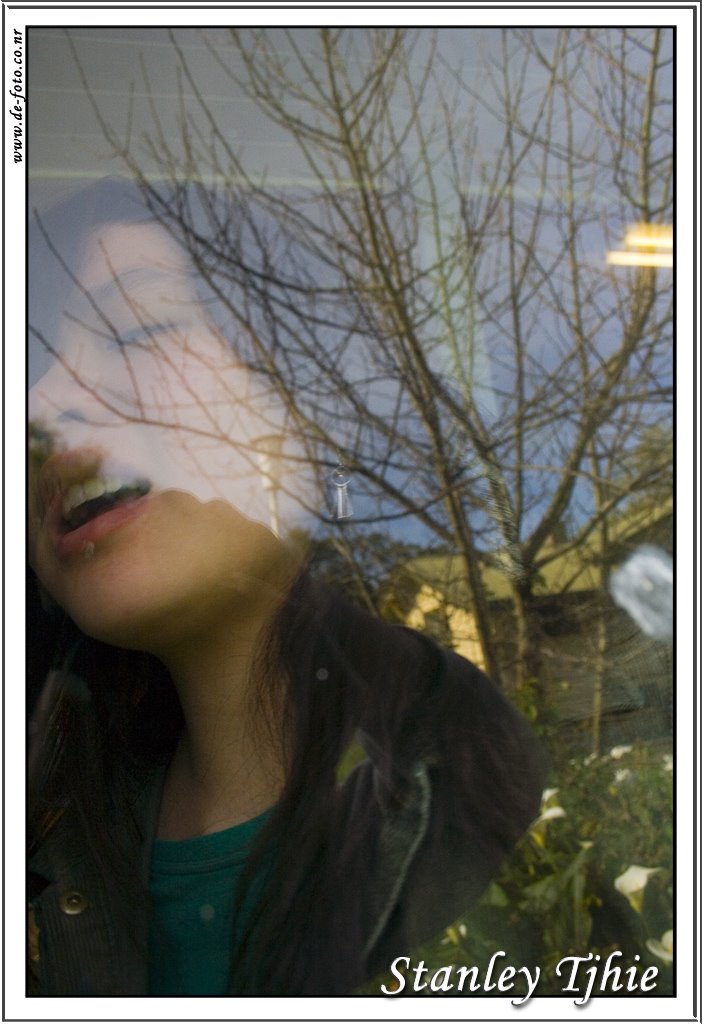
This is Miechelle. Yes, no mistake in that spelling. This was taken at the Camp Coorimungle during the morning's breakfast. I was outside taking photos of the flowers when she started to walk out. Pointed the camera and her and "snap". She was actually giving me those faces and just nice, I had captured a very interesting and valuable moment.


Glass is a uniform amorphous solid material, usually produced when the viscous molten material cools very rapidly to below its glass transition temperature, without sufficient time for a regular crystal lattice to form. The most familiar form of glass is the silica-based material used for windows, containers and decorative objects.

Common glass contains about 70-72 weight % of silicon dioxide (SiO2). The major raw material is sand (or "quartz sand") that contains almost 100% of crystalline silica in the form of quartz. Even though it is an almost pure quartz, it may still contain a small amount (<>Cold work includes traditional stained glass work as well as other methods of shaping glass at room temperature. Glass can also be cut with a diamond saw, or copper wheels embedded with abrasives, and polished to give gleaming facets; the technique used in creating waterford crystal. Art is sometimes etched into glass via the use of acid, caustic, or abrasive substances. Traditionally this was done after the glass was blown or cast. In the 1920s a new mould-etch process was invented, in which art was etched directly into the mould, so that each cast piece emerged from the mould with the image already on the surface of the glass. This reduced manufacturing costs and, combined with a wider use of colored glass, led to cheap glassware in the 1930s, which later became known as Depression glass. As the types of acids used in this process are extremely hazardous, abrasive methods have gained popularity.

(courtesy wikipedia.com)

Thursday, 19 October 2006

Outstanding One

Outstanding One


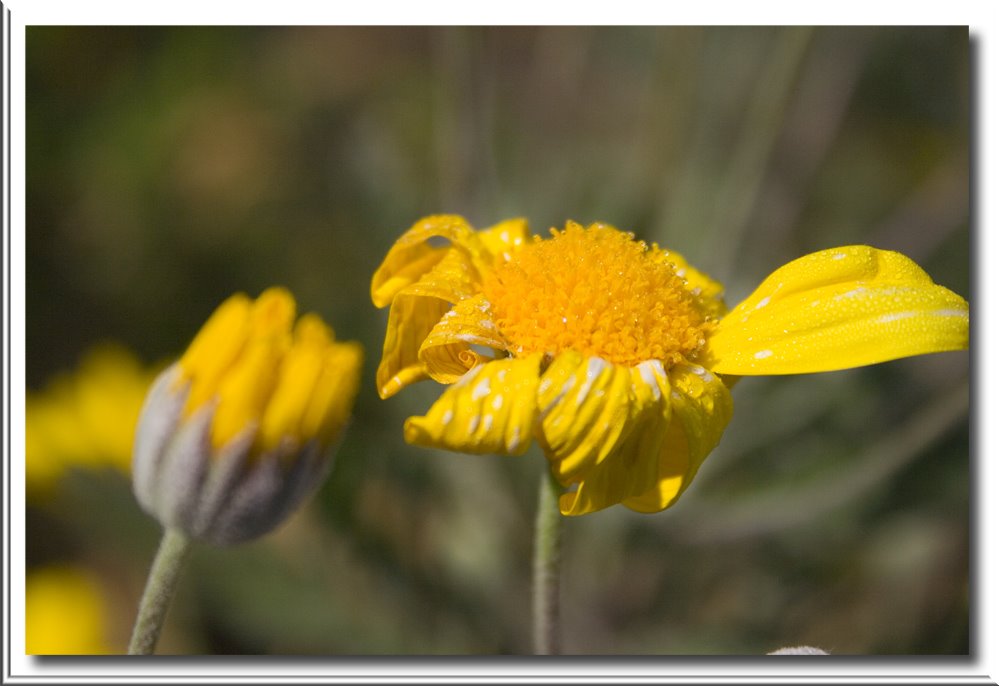
We had the blooming of the flowers. Now, of course we must also have the end. Everything in this world will come to an end. This flower is shot nearby and it seems that it is wethering. However, one must notice that it still have one of its beautiful petal extending proudly outwards. The strongest survivor?

Wednesday, 18 October 2006

Quench of Thirst

Quench of Thirst


Same flower as yesterday. However, for those who are detailed will see that there are "water" on the flower. It is actually the dew. After the sun comes out, the dew start appearing on the flower. One thing that I noticed is that the centre of this flower is different to the centre of the yesterday's flower. Could it be that this flower is more mature and it had start to "spike".

Tuesday, 17 October 2006

Too late but too early

Too late but too early


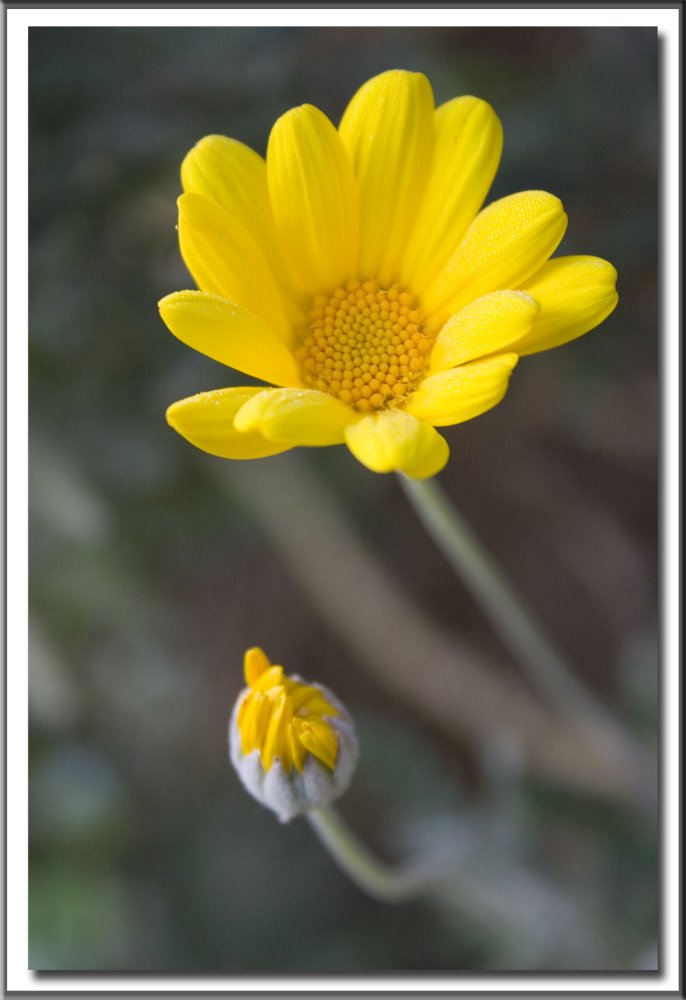
Too late but too early is the picture about the contrast between a fully "springed" flower and a still budding flower. Not only the time difference when they bloom are depicted, the different size and shape are significantly unique. However, one must realise that these two subjects come from the same bush. Why the lateness? I do not know too. I do not know the name of the flower. Is it daisy? Euryops? or Marguerite?

Monday, 16 October 2006

Pointing to heaven

Pointing to heaven


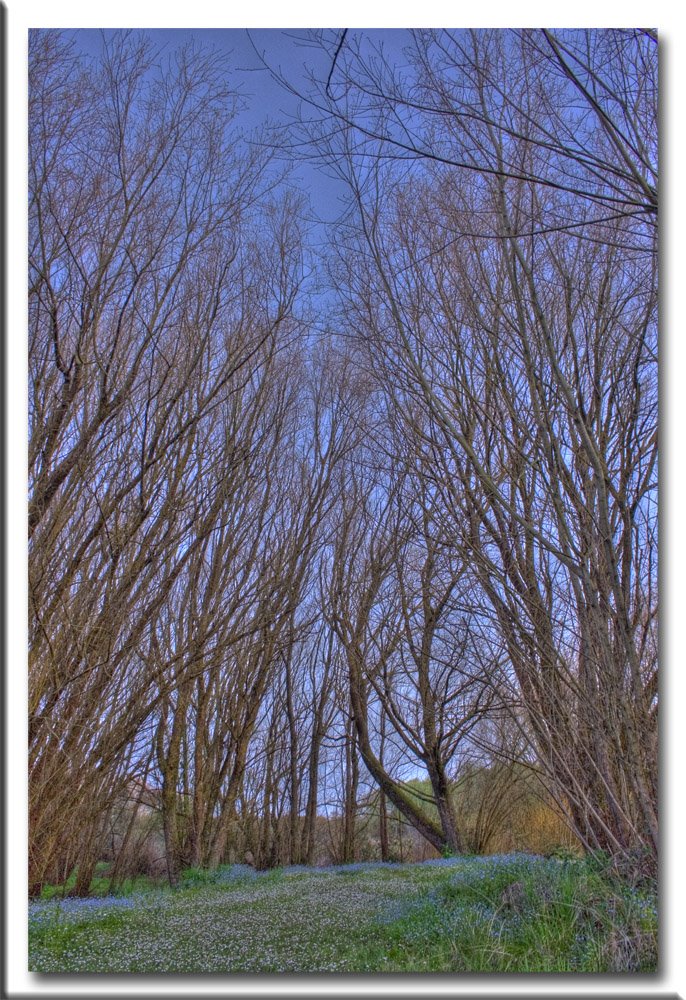
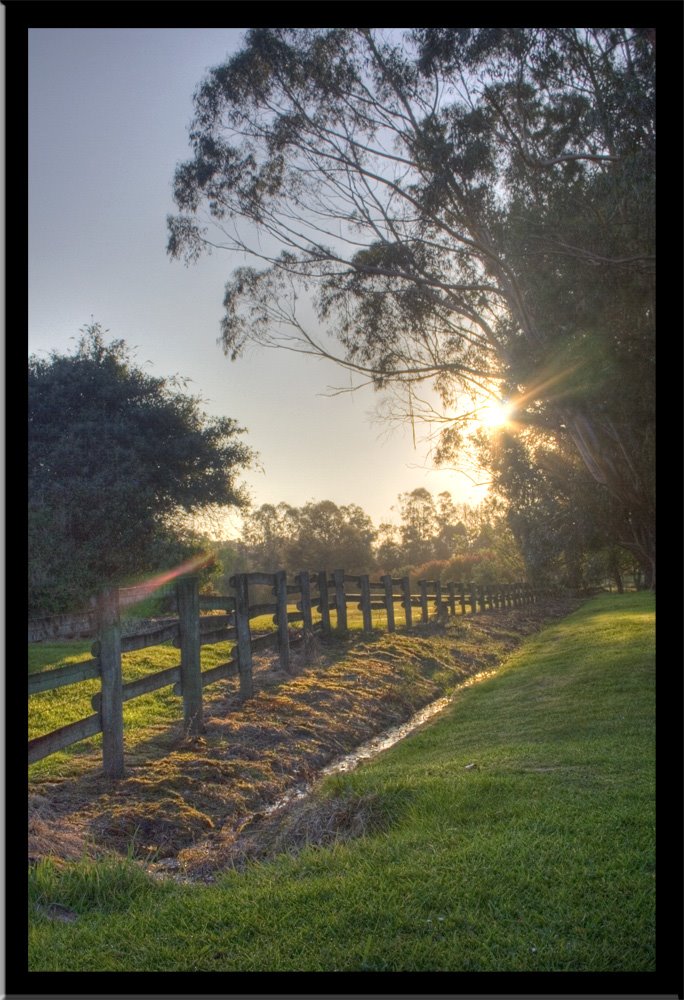
This is another HDR shot. This was again at the Camp Cooriemungle. The ground was the picture in the previous post, "Royalty Ground". The trees were out of leaves as it was during winter and spring is not here yet. The tree branches were curving out and poiting up towards the sky! I guess these were the symtomps that the tree need more sunlight and had to branch out and reach out for the sky in order to survive.


Heaven is an afterlife concept found in many religions or spiritual philosophies.

Those who believe in heaven generally hold that it (or Hell) is the afterlife destination of many or all humans. In unusual instances, humans have had, according to many testimonies and traditions, personal knowledge of Heaven. They presume this is for the purpose of teaching the rest of humanity about life, deities and notions of the afterlife.

One popular medieval view of Heaven was that it existed as a physical place above the clouds and that God and the Angels were physically above, watching over man. With the dawn of the Age of Reason, science began to challenge this notion; however Heaven as a physical place survived in the concept that it was located far out into space, and that the stars were "lights shining through from heaven".

Religions that teach about heaven differ on how (and if) one gets into it. In most, entrance to Heaven is conditional on having lived a "good life" (within the terms of the spiritual system). Catholicism and Anglican Christianity states that "He that believeth and is baptised shall be saved." However, these religions also state that pride (the feeling of knowing that one is going to Heaven) can keep you from getting in Heaven. These religions also state that you must live a repented life in order to get to heaven.

Roman Catholics believe that entering Purgatory after death cleanses one of one's sins and makes one acceptable to enter Heaven. This is valid for "venial sins" only. Some within the Anglican Church also hold to this belief, despite their Anglican history. However, in Oriental Orthodox Churches, it is only God who has the final say on who enters Heaven.

The Seventh-day Adventist understanding of heaven is based on Biblical writings which set out the following:

  • That heaven is a real place where God resides.
  • That earth and all the animate and inanimate things therein and within its celestial space are products of God's creative work.
  • That God sent His Son, Jesus Christ to earth to live as a human being, but who "perfectly exemplified the righteousness and love of God. By His miracles He manifested God's power and was attested as God's promised Messiah. He suffered and died voluntarily on the cross for our sins and in our place, was raised from the dead, and ascended to minister in the heavenly sanctuary in our behalf." [5].
  • That Christ promises to return as a Saviour at which time He will resurrect the righteous dead and gather them along with the righteous living to heaven. The unrighteous will die at Christ's second coming. [6].
  • That after Christ's second coming there will exist a period of time known as the Millennium during which Christ and His righteous saints will reign and the unrighteous will be judged. At the close of the Millennium, Christ and His angels return to earth to resurrect the dead that remain, to issue the judgements and to forever rid the universe of sin and sinners. [7].
  • "On the new earth, in which righteousness dwells, God will provide an eternal home for the redeemed and a perfect environment for everlasting life, love, joy, and learning in His presence. For here God Himself will dwell with His people, and suffering and death will have passed away. The great controversy will be ended, and sin will be no more. All things, animate and inanimate, will declare that God is love; and He shall reign forever." [8]. It is at this point that heaven is established on the new earth.
(courtesy wikipedia.com)

Sunday, 15 October 2006

Royalty Ground

Royalty Ground


More than a luxury it is. Walking on a groud full of those small flowers lined with other colourful ones on the sides. This was again at the Camp Cooriemungle. The shot was captured with an aperature of f/10. This is to try to get as much depth of field (DOF) as possible or in layman's words, so that the whole picture is as focus as possible. Taking with a smaller aperature like f/14 will even make it more focus, but this would means the shot will have to be taken with a slower shutter speed and casue a blur picture due to the winds blowing the flowers.

Saturday, 14 October 2006

Lake

Lake


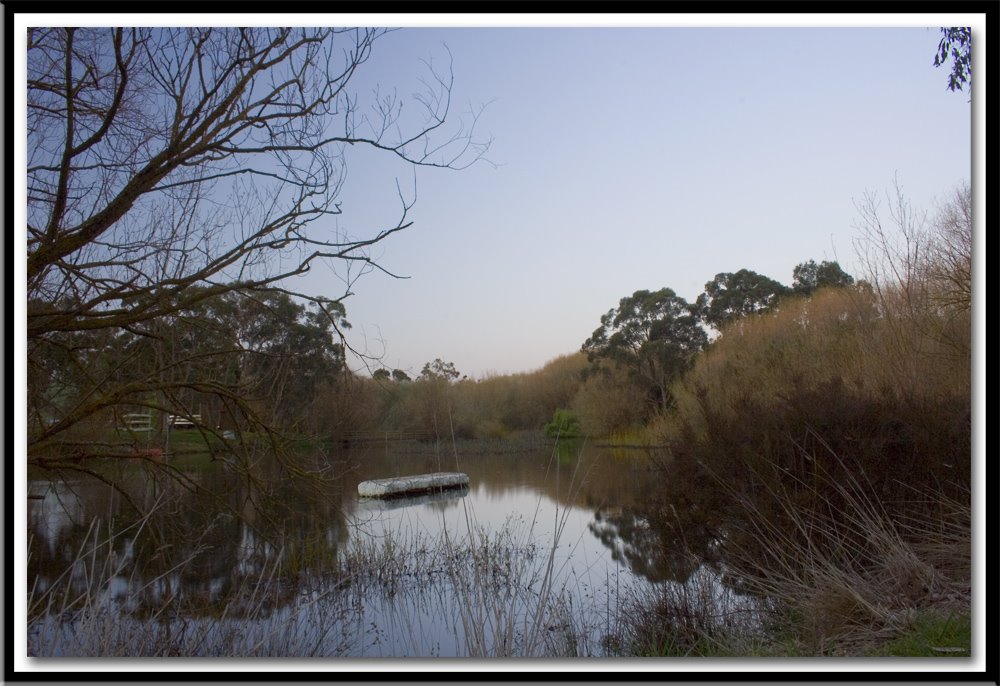
This was the lake in the Camp Cooriemungle. The lake was significantly peaceful and there were some duck quacking across the lake at some point. The still water acts like a giant mirror, reflecting the trees and bush on the lake.


A lake is a body of water or other liquid of considerable size surrounded by land. The vast majority of lakes on Earth are fresh water, and most lie in the Northern Hemisphere at higher latitudes. In ecology the environment of a lake is referred to as lacustrine. Large lakes are occasionally referred to as "inland seas" and small seas are occasionally referred to as lakes.

Salt lakes (also called saline lakes) can form where there is no natural outlet or where the water evaporates rapidly, and the drainage surface of the water table has a higher than normal salt content. Examples of salt lakes include Great Salt Lake, the Caspian Sea and the Dead Sea.

Small, crescent-shaped lakes called oxbow lakes can form in river valleys as the result of meandering. The slow-moving river forms a sinuous shape as the outer side of bends are eroded away more rapidly than the inner side. Eventually a horseshoe bend is formed and the river cuts through the narrow neck. This new passage then forms the main passage for the river and the ends of the bend become silted up, thus forming a bow-shaped lake.

Lake Vostok is an subglacial lake in Antarctica, possibly the largest in the world. The pressure from ice and the internal chemical composition means that if the lake were drilled into, it may result in a fissure which would spray in a similar fashion to a geyser.

Some lakes, such as Lake Baikal and Lake Tanganyika lie along continental rift zones, and are created by the crust's subsidence as two plates are pulled apart. These lakes are the oldest and deepest in the world, and may be destined over millions of years to become oceans. The Red Sea is thought to have originated as a rift valley lake.


  • The largest lake in the world by surface area is the Caspian Sea. With a surface area of 394,299 km², it has a surface area greater than the next six largest lakes combined.
  • The deepest lake is Lake Baikal in Siberia, with a bottom at 1,637 m (5,371 ft.) and is the world's largest freshwater lake by volume.
  • The world's oldest lake is Lake Baikal, followed by Lake Tanganyika (Tanzania).
  • The world's highest lake is Lhagba Pool in Tibet at 6,368 m.
  • The world's lowest lake is the Dead Sea, currently (2005) 418 m (1,371 ft.) below sea level. It is also one of the lakes with highest salt concentration.


  • Finland is known as The Land of the Thousand Lakes (actually there are 187,888 lakes in Finland, of which 60,000 are large)
  • Minnesota is known as The Land of Ten Thousand Lakes.
  • The license plate of the Canadian province of Manitoba used to claim "100,000 lakes" as a direct upmanship on neighboring Minnesota.
  • The Great Lakes of North America originated in the ice age.
  • Over 60% of the world's lakes are in Canada; this is because of the deranged drainage system that dominates the country.

Friday, 13 October 2006

Mono in Complex

Mono in Complex


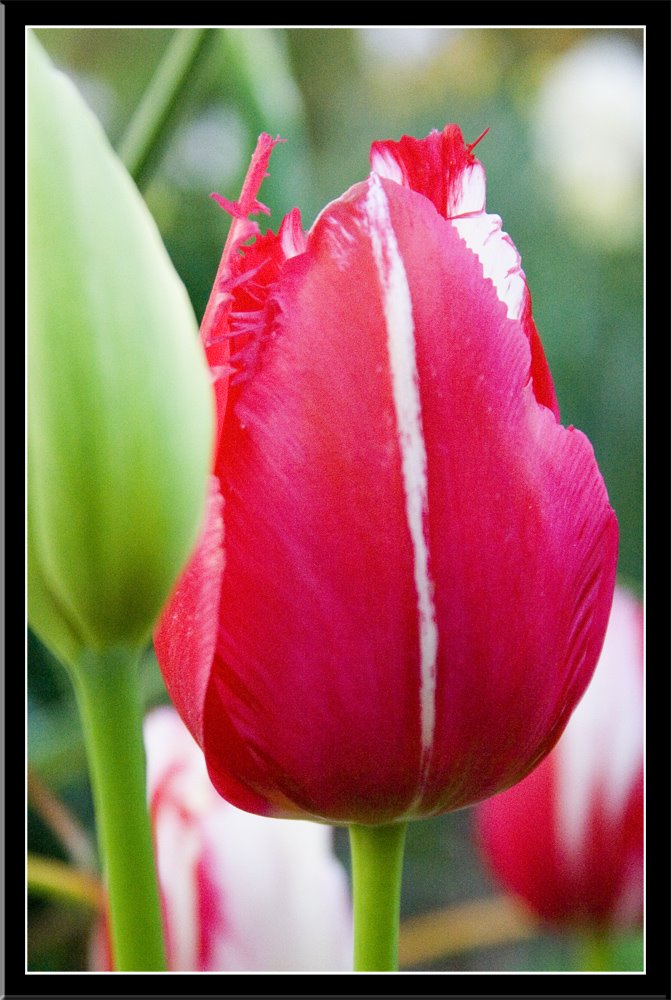
This flower was again shot in Camp Cooriemungle. Mono in Complex decribes the special attention of the red tulip and especially the interesting part is that the contrast it made with it's own deep green stalk adn also the green bud on the left. I do still remember that my friend wanted to get this flower for a birthday surprise and it really cost very expensive in Singapore as these tulips have to be flown all the way from Holland.


They are perennial bulbous plants growing to 10–70 centimetres (4–27 in) tall, with a small number of strap-shaped, waxy-textured, usually glaucous green leaves and large flowers with six tepals. The fruit is a dry capsule containing numerous flat disc-shaped seeds.

The tulip is the national flower of Iran and Turkey, and tulip motifs feature prominently in Persian and Turkish folk arts. The European name for the flower comes from the Persian word for turban, a origin probably originating in the common Turkish custom of wearing flowers in the folds of the turban. Alternatively, the use may have arisen because this eastern flower, when not yet in full bloom, resembles a turban.

ass now known as South Holland, due to its drained fens similar to Holland, plus it is easily the main centre of the UK bulb industry. To reflect this, the local radio station is named Tulip Radio [1].

Between 1634 and 1637, the early enthusiasm for the new flowers triggered a speculative frenzy now known as the tulip mania and tulip bulbs were then considered a form of currency. The Netherlands and tulips are still associated with one another. The term 'Dutch tulips' is often used for the cultivated forms.

Tulip Festivals are held in the Netherlands and in North America every May. Tulips are now also popular in Australia, and several festivals are held during September and October in the Southern Hemisphere's spring.

Thursday, 12 October 2006

Spot Light

Spot Light


You there! Yes, there flowers seems to be calling you to its nest. Pollinate me! The bright yellow and spreading outer hand are waving and the centre deep orange are spotlighting on you. These flowers were shot in the Camp Cooriemungle again. Lots of flowers I must say. Anyone knows the name of this flower?


There are many general principles to lighting a stage, although to allow for artistic effect, no hard and fast rules can ever be applied. The principles of lighting include:

  • Illumination: The simple ability to see what is occurring onstage. Any lighting design will be ineffective if the audience has to strain to see the characters; unless this is the explicit intent.
  • Revelation of form: Altering the perception of shapes onstage, particularly three-dimensional stage elements.
  • Focus: Directing the audience's attention to an area of the stage or distracting them from another.
  • Mood: Setting the tone of a scene. Harsh red light has a totally different effect than soft lavender light.
  • Location and time of day: Establishing or altering position in time and space. Blues can suggest night time while orange and red can suggest a sunrise or sunset. Use of gobos to project sky scene, moon etc
  • Projection/stage elements: Lighting may be used to project scenery or to act as scenery onstage.
  • Plot: A lighting event may trigger or advance the action onstage.
  • Selective visibility: Lighting may be used to show only the areas of the stage which the designer wants the audience to see.
A dimmer is a device used to vary the voltage to the instrument’s lamp. As voltage to the lamp decreases, the light fades or dims. It is important to note that some color change also occurs as a lamp is dimmed, allowing for a limited amount of color control through the dimmer. Fades can be either UP or DOWN, that is increasing or decreasing the intensity. Today, most dimmers are solid state, although many mechanical dimmers still exist.

(courtesy wikipedia.com)
Wednesday, 11 October 2006

Speed Limit

Speed Limit


Warning to all humans for the earthworms and the animals living below. Please enter this hole only at max 20 km/h or you may hurt the earthworms and the bugs sleeping deep down in the earth. This is in Camp Cooriemungle with some sign stucked on the ground. This shot was composed with a flash fired. It provides a strikingly bright fall of light on the reflective sign while stoping any light from reaching the signs behind.

Tuesday, 10 October 2006

Dandelion

Dandelion


This was shot at the Camp Cooriemungle. I saw this round puffy thing on the grass field and is such a perfect subject. I shot it with the minimum aperature which cause only some part to be in the focus but I find that it is too shallow. I have no choice as shoot with the smallest aperature to achieve a shutter speed without blurring the picture. This is mainly because of the dark setting sun.


Dandelion (Taraxacum) is a large genus of flowering plants in the family Asteraceae. They are tap-rooted biennial or perennial herbaceous plants, native to temperate areas of the Northern Hemisphere of the Old World.

Away from their native regions, they have become established in the Americas, Australia and New Zealand as weeds. They are now common plants throughout all temperate regions.

While the dandelion is considered a weed by many gardeners, the plant does have several culinary and medicinal uses. Dandelions are grown commercially at a small scale as a leaf vegetable. The plant can be eaten cooked or raw in various forms, such as in soup or salad. Usually the young leaves and unopened buds are eaten raw in salads, while older leaves are cooked. Raw leaves have a slightly bitter taste. Dandelion salad is often accompanied with hard boiled eggs. The leaves are high in vitamin A, vitamin C and iron, carrying more iron and calcium than spinach. [1].

Dandelion flowers can be used to make dandelion wine. The recipe usually contains citrus fruit. Another recipe using the plant is dandelion flower jam. Ground roasted dandelion root can be used as a coffee substitute. Drunk before meals, it is believed to stimulate digestive functions. Sold in most health food stores, often in a mixture, it is considered an excellent cleansing tonic for the liver.

Dandelion root is a registered drug in Canada, sold as a diuretic. A leaf decoction can be drunk to "purify the blood", for the treatment of anemia, jaundice, and also for nervousness. The milky latex has been used as a mosquito repellent; the milk is also applied to warts, helping get rid of them without damaging the surrounding skin. A dye can also be obtained from the roots of the plant. A new mixture of roasted roots is sold as a product called DandyBlend which tastes like coffee after the inulin in the dandelion is roasted.

"Dandelion and Burdock" is a soft drink that has long been popular in the United Kingdom with authentic recipes are sold by health food shops, but it is not clear whether the cheaper supermarket versions actually contain either plant.

This plant also is useful in farming, because its deep, strong roots break up hardpan.

(courtesy wikipedia.com)
Monday, 9 October 2006

Leading Line

Leading Line


This is int he camp Coorimungle. Nice? Of course! Well, may not be the taste for those who are looking for "real" subject. This shot is made from 3 shots taken over, under and normal exposure. What this means is that one of the picture is taken very very bright and one very very dark and another normal. These three pictures are then combined using High Dynamic Range (HDR) rendering program to create one HDR image.


HDR allows a far greater dynamic range of exposures (i.e a large difference between light and dark areas) than normal digital imaging techniques. The intention of HDR is to accurately represent the wide range of intensity levels found in real scenes ranging from direct sunlight to the deepest shadows.

One problem with HDR has always been in viewing the images. CRTs, LCDs, prints, and other methods of displaying images only have a limited dynamic range. Thus various methods of "converting" HDR images into a viewable format have been developed, generally called "tone mapping".

Early methods of tone mapping were simple. They simply showed a "window" of the entire dynamic range, clipping to set minimum and maximum values. However, more recent methods have attempted to show more of the dynamic range. The more complex methods tap into research on how the human eye and visual cortex perceive a scene, trying to show the whole dynamic range while retaining realistic colour and contrast.

(courtesy wikipedia.com)

Sunday, 8 October 2006

Butt Cover

Butt Cover


This is a baby Llama in the Camp Coorimungle. It is very cute. The name Llama is often mispelled as lasounds very chinese. One thing which caught my attention was the butt. It's tail is wide and looks like some floor mat. What other animal which cover it's ass so well as this Lama?


The llama (Lama glama) is a large camelid that originated in North America and then later on moved on to South America. The most apparent visual difference between llamas and camels is that camels have a hump or humps and llamas do not.

Llamas who are well-socialized and brought up by loving families are very friendly and pleasant to be around. They are extremely curious and most will approach people easily. Llamas who are not well-socialized or who have been abused or mis-treated, however, are quite stand-offish. They are also more likely to treat humans as they treat each other, which is characterized by spitting, kicking and/or neck wrestling.

Llamas are very social herd animals and spitting is a part of that. They often spit at each other as a way of disciplining lower-ranked llamas in the herd. Spitting at a human is a rare thing unless the llama is being trained. A llama's social rank in a herd is never static. They can always move up or down in the social ladder by picking small fights. This is usually done between males to see who becomes alpha. Their fights are visually dramatic with spitting, ramming each other with their chests, neck wrestling and kicking, mainly to knock the other off balance. The females are usually only seen spitting as a means of controlling other herd members.

While the social structure might always be changing, they are a family and they do take care of each other. If one notices a strange noise or feels threatened, a warning scream is sent out and all others come to alert. They can also make a humming sound, which is usually a sign of recognition.

(courtesy wikipedia.com)


Saturday, 7 October 2006

The Grass Is Greener

The Grass Is Greener


Taken at Great Ocean Road. Is the grass over that side greener? Of course not, there are FENCE! I love the way how the land mass and the tree curve up and down while the river at the foreground stay straight and still.

Friday, 6 October 2006

Emission

Emission


Refuel station at Port Campbell on the way to the camp Coorimungle. I noticed that the setting looks very old fashioned and the white rusty beetle car and the gas tank will definately add an an impact when made into black and white photo.


Some stations carry specialty fuels such as liquified petroleum gas (LPG), natural gas, hydrogen, biodiesel, ethanol, or kerosene. In recent times filling stations have also begun to sell butane and added shops to their primary business, and convenience stores are now a familiar sight alongside pumps.

As automobiles became popular in the United States, the need for gas stations arose. (The first places that sold gasoline were pharmacists, as a "side line" business.)[citation needed] Henry Ford's use of mass-production techniques to manufacture automobiles made it possible for consumers to purchase cars at an affordable price. This increase in car ownership resulted in a greater demand for filling stations. The first gas station was built in 1907 by Standard Oil of California (now Chevron) in Seattle, Washington. Early on, they were known to motorists as "filling stations". Standard Oil began erecting roadside signs of their logo to advertise their gas stations.

In small towns and rural areas, gas stations sometimes allow customers to pump gas first and pay afterwards. Due to the higher incidence of crime in large urban areas (especially drive-offs), customers must generally pay before pumping fuel.

Modern gas stations have pay-at-the-pump capabilities — in most cases credit, debit, and ATM cards are accepted. At some stations, cash is also taken at the pump, although customers must collect their change at a cashier window which is often bullet-proof. Occasionally a station will have a pay-at-the-pump-only period per day, when attendants are not present, often at night, and some stations are pay-at-the-pump-only 24 hours a day.

Today, few stations advertise full service, and those that do usually only provide mini service unless a manager is involved. However, full service stations are common in wealthy and upscale areas. The cost of full service is usually assessed as a fixed amount per gallon.

It is prohibited to use open flame and, in some places, a mobile phone on the forecourt of a gas station. This is because of the risk of igniting gasoline vapor. The safety issue with mobile phones, however, is disputed. While mobile phones can distract people and increase the chance of an accident occurring, there is no significant danger from the radio waves emitted by a mobile phone. In fact, many petrol station display towers in the UK are also relay transmitters for the mobile phone networks.

Although it has been claimed that a faulty mobile phone can cause sparks or a build-up of static electricity in the user, this has not yet been conclusively proven, however mobile phone manufacturers and gas stations still tend to ask the users to switch off their phones. One is more likely to get a spark from wearing nylon clothing than from a mobile phone [1]. Also, the static charge acquired by a person as he or she leaves the car (due to triboelectric charging from friction between the person's clothing and the car seat) is thought to be the culprit in over 50% of fires which occur during refuelling. Usually, when a person leaves the car, he or she must open the door covering the gas cap and remove the cap itself, thus dissipating any static charge through a small shock as he or she is "grounded" to the car's metal body.

However, if the person has set the pump to continue filling automatically, returns to the car, then leaves the car again to check the pump before it has fully stopped, an explosion could easily result. This is because after the person has left the car for the second time, he or she is likely to remain electrically charged up to the point of touching the nozzle, at which point the concentrated vapour expelled from the tank can be ignited by sparks jumping from the person's hand to the nozzle. In the UK automatic filling is outlawed except for HGVs filling with diesel fuel to minimise the risk of fire. A recent investigation by the Discovery network found that the main culprit in most gas station fires were women, as they are 6 times more likely to get in and out of their vehicles during refueling.

It is therefore always good practice, especially in arid climates, to safely ground oneself by touching any part of the car away from the gas tank port before filling the tank or touching the filling nozzle. The effect has also been noted in several instances where jerrycans were filled in the back of a pickup truck which had a plastic "bed liner". These tanks should always be removed from the vehicle and filled while on the ground.

(courtesy wikipedia.com)


Thursday, 5 October 2006

Touching Nature

Touching Nature


This once again is at the Otways National Park in Great Ocean Road. There is some of these tall straight shooting tree around. I had placed one of my finger in the picture initially wanting to show the scale of how big these trees are. But of course the stupid me realises that I will hav to stick my hand near the tree to get the correct proportion. So finally, I "touched" the tree using my index finger. This was further enchanged in photoshop to create a higer dynamic range by using a brightened and another normal picture and masking them. I do not know the name of the tree, it might be the same family as the one featured below.


According to the researches of Dr A.C. Carder, the tallest tree ever measured was an Australian Eucalyptus regnans at Watts River, Victoria, Australia, reported in 1872 by forester William Ferguson. It was 132.6 m (435 ft) tall and almost certainly measured over 150 m (500 ft) originally.

Another Eucalyptus at Mt Baw Baw, Victoria, Australia, is believed to have measured 143 m (470 ft) in 1885.

The Dyerville Giant, a coast redwood, estimated to be 1,600 years old when it fell in March 1991, was proven to be 113.4 m (372 ft) high, not counting the 1.5 m (5 ft) of buried base. It grew in Humboldt Redwoods State Park, California, USA and was the tallest tree of modern times.

(courtesy guineessworldrecord.com)

Wednesday, 4 October 2006

Curly Beans

Curly Beans


These are the fern moss's early stage "arm". It will slowly uncurls and become the stalks which you see in the picture too. This picture was taken at the Otways National Park in Great Ocean Road. It is one of the few forest left in Australia. There was a lot of those "Curly Beans" around as we are slowly moving to spring season.


Otway National Park is perfect for a wide variety of recreational and nature-based activities. Some of the most rugged and inaccessible coastline in Victoria lies in the 12,876 hectare park, an invitation to the adventurous to explore this 60-kilometre stretch from Apollo Bay to Princetown, reached via the Great Ocean Road.

The Otways were formed 150 million years ago when the great southern land mass known as Gondwana began to break up. Part of the coastline is rich in fossils, including those of a dinosaur that roamed here 105 million years ago. Aboriginal communities hunted in the coastal woodlands with fire, dingoes and spears. Although the steep slopes and tall forest of the Otways were a barrier to European settlement, settlers eventually began to move in.

(courtesy greatoceanrd.org.au)

Tuesday, 3 October 2006

No Imi

No Imi


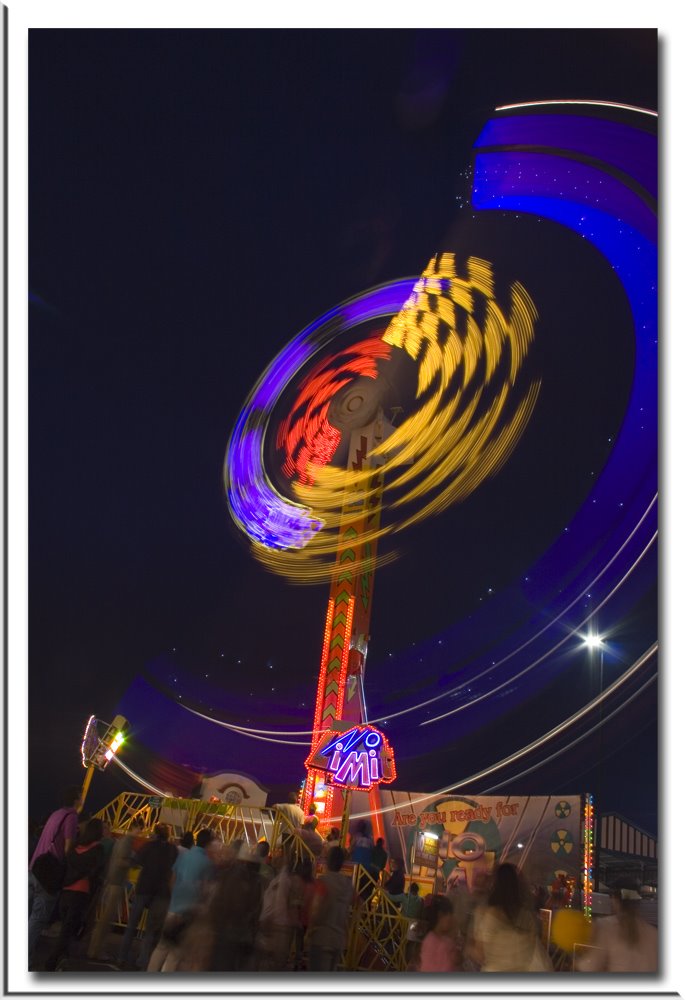
For a change of colours from the sandy brown, blue sky and the black and white yesterday, I am jumping through my photo to my recent visit to the Royal Melbourne Show 2006. It was a great place with the damn hot sun hanging high and showers approaching the night. The colours were great. I told myself that I should have went there earlier as 1st October was the last day. This featured ride inmy blog is called No Imi. A 360 degrees turn ride with some hanging in the air still moments. Of course I didn't ride it or else the people bellow better start opening their umbrellas. This ride was powered by a fan. Yes, a FAN! a gigantic fan fixed to main arm. It is able to stop the ride in the mid air and turn it the make it swing the other way round!


There are three main types of fans used for moving air, axial, centrifugal (also called radial) and cross flow (also called tangential). The axial-flow fans have blades that force air to move parallel to the shaft about which the blades rotate. Axial fans blow air across the axis of the fan, linearly, hence their name. This is the most commonly used type of fan, and is used in a wide variety of applications, ranging from small cooling fans for electronics to the giant fans used in wind tunnels. The centrifugal fan has a moving component (called an impeller) that consists of a central shaft about which a set of blades form a spiral pattern.

Fans typically go along together with electric motors. An electric motor's poor low speed torque and powerful high speed torque are a natural match for a fan's load. Fans are often attached directly to the motor's output, with no need for gears or belts. The electric motor is either hidden in the fan's center hub or extends behind it. For big industrial fans, 3-phase asynchronous motors are commonly used.

(courtesy wikipedia.com)

Monday, 2 October 2006

Saunter

Saunter


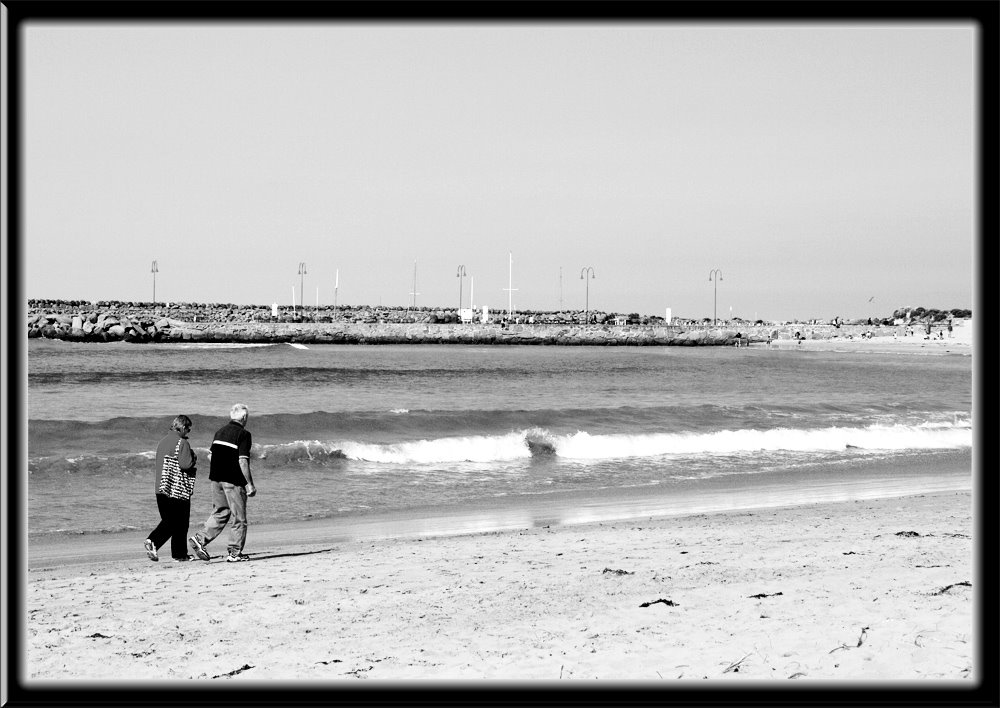
Isn't it getting boring looking at all those blue sky and brown sand for the past few days. Well, at least I am. This is a black and white post-processed photo of an old couple walking along the Apollo beach. it features a small cave hole breaking wave. Romantic walk or sunbathing is common at this beach. Who knows the couple might be just some friends trying to get to the carpark on the right!?!


1. Matira Beach, Bora Bora, Tahitian Islands
It's not the soft white sand, the spectacular sunsets or the languid tropical breezes that put Matira Beach, located on Bora Bora's southern tip, at the top of our list of the world's most romantic beaches. It's the calm, warm, crystal-clear water -- the perfect playground for dolphins, ray, vibrant tropical fish and you! The island of Bora Bora is completely encircled by reefs and smaller islands, creating a shallow, protected lagoon that offers the best swimming and snorkeling around. For a day -- or a year -- of pure, lazy pleasure on one of the world's most romantic beaches with your new spouse, Matira Beach is an unbeatable choice. Everyone who visits this magical place agrees that it's well worth the long trip to Bora Bora see this number one "most romantic beach".

2. Pink Beach, Harbour Island, Bahamas
No list of "Most Romantic Beaches" could possibly be complete without including the Bahamas most famous romantic beach, Pink Beach. Wide and lined with towering palms, this romantic beach is made up of fine-grained sand in a glorious shell-pink. The unique color of Pink Beach would be stunning even without the warm and welcoming turquoise-blue ocean lapping at its edge, but the combination of pink sand, azure-blue sky, turquoise water, and green palm trees is so delightful, particularly at sunset, that you almost won't believe your eyes. In fact, Pink Beach is consistently voted one of the most romantic beaches in the entire Caribbean! Spend a day at this romantic beach and we bet you'll decide to come back for your first anniversary -- and maybe your second and third.

3. Promenade des Anglais, Nice, France
Picture a wide promenade lined with stylish boutiques, elegant hotels, and sidewalk cafes just steps away from the clear, azure waters of the Mediterranean. Jaunty blue and white umbrellas dot what must be the world's most chic beach -- the Promenade des Anglais on the glamorous French Riviera.

The Promenade des Anglais offers beautiful sand and swimming to rival other top beaches, but with an aura of pampered sophistication that can only be found in France, as formal waiters can bring cocktails, snacks, or even champagne right to your beach chair! If you're looking for the pure delight of the most romantic beach in France, turn your attention to Nice and the Promenade des Anglais.

4. Green Sand Beach, Hawaii, USA
White-sand beaches aren't common. Pink-sand beaches are downright unusual. But only on the geological wonderland that is the Big Island of Hawaii can you find the rarest of them all -- a romantic beach made of deep green crystals. The green sand is formed almost entirely of olivine, a crystal found in the nearby volcano. The beach itself is very tiny but beautiful, and offers wading more than swimming. And considering you have to hike three miles to get there, the Green Sand beach is one romantic beach experience that you have to earn! But don't be discouraged - the memory of standing with your new spouse, watching the blue waters of the Pacific crash against glowing green sand, will fill your dreams for a lifetime. Many couples claim an almost "spiritual awakening" here and cite it as the reason they vote this particular beach to be one of the most romantic beaches in Hawaii!

5. South Beach, Florida, USA
If your idea of a romantic beach includes plenty of energy, activity, and nightlife, then South Beach in Miami, Florida, is for you. Sherbert-colored Art Deco buildings vie with the warm turquoise water of the Caribbean for your attention. What makes this one of the most romantic beaches in the US is the eclectic blend of cuban and european cultures mixed with elegance and sophistication. Whether you spend the day walking for miles along this romantic beach hand in hand, picking up souvenirs in any of numerous designer stores and boutiques, or enjoying a meal in cheerful sidewalk cafes, South Beach is sure to make you realize that being part of a couple makes every experience double the fun.

(courtesy honeymoons-by-sunset.com)

Sunday, 1 October 2006

Hurry Sis!

Hurry Sis!


This was taken at Apollo bay in Great Ocean Road. Over this "sand dunes" is the Apollo beach. These two girls were coming back from the beach when the elder sister decided to rest or maybe play with the sand. The younger sister, giving an impatient look and holding a doll on one hand, makes my main subject. The look and the way how the doll was held gives the uncongenial perception of the situation.


Dolls are often intended as toys for children but other uses of dolls include as a keepsake or collectible item for any age, namely older children to adults. However, dolls are also used because of their cultural significance, possibly for use in a ceremony or ritual, or even as a physical representation of a deity, these uses of course go along with a simpler, a doll is another way for decoration. As time has gone on, it's become more important for dolls to be as lifelike as possible, and these dolls can be used for professional use, (see anatomically correct doll), or as sex toys (see sex doll). Artists' mannequins are also known as "artists' dolls." Dolls with action figure-like articulation are sometimes referred to as "action dolls[1]."

Dolls have been around for far longer than most would think, archaeological evidence placing dolls as foremost candidate for oldest known toy, having been found in Egyptian tombs which date to as early as 2000 BC. In Egypt, as well as Greece and Rome, it was common to find them in the graves of children, these were mainly made from wood, however, among the wealthier families, pottery dolls were also found.

Many suggest that dolls were around even before 2000 BC, going further back to prehistoric times, and were probably made from materials such as clay, mud, fur, wood, etc.

(courtesy wikipedia.com)